Flyte

- Acquired
- February 27, 2025, as Flewber
- Sold
- March 9, 2026, to Catheter Precision (NYSE American: VTAK)
- Price
- $11.55 million in cash, a $5 million note and VTAK preferred stock
- Kept
- VTAK preferred stock, the note, and VTAK as a client
- Aircraft
- Cirrus Vision Jet
- Presentations
Flyte Investor Presentation · Q1 2025 · PDF
Flyte sells private flights: short hops between regional airports on Cirrus Vision Jets, charter anywhere in the world, and curated trips. Creatd bought it as Flewber in February 2025, rebuilt how it ran, and sold it thirteen months later to an NYSE American-listed company for cash, a note and stock. The buyer is now a Creatd client.
What Flyte does
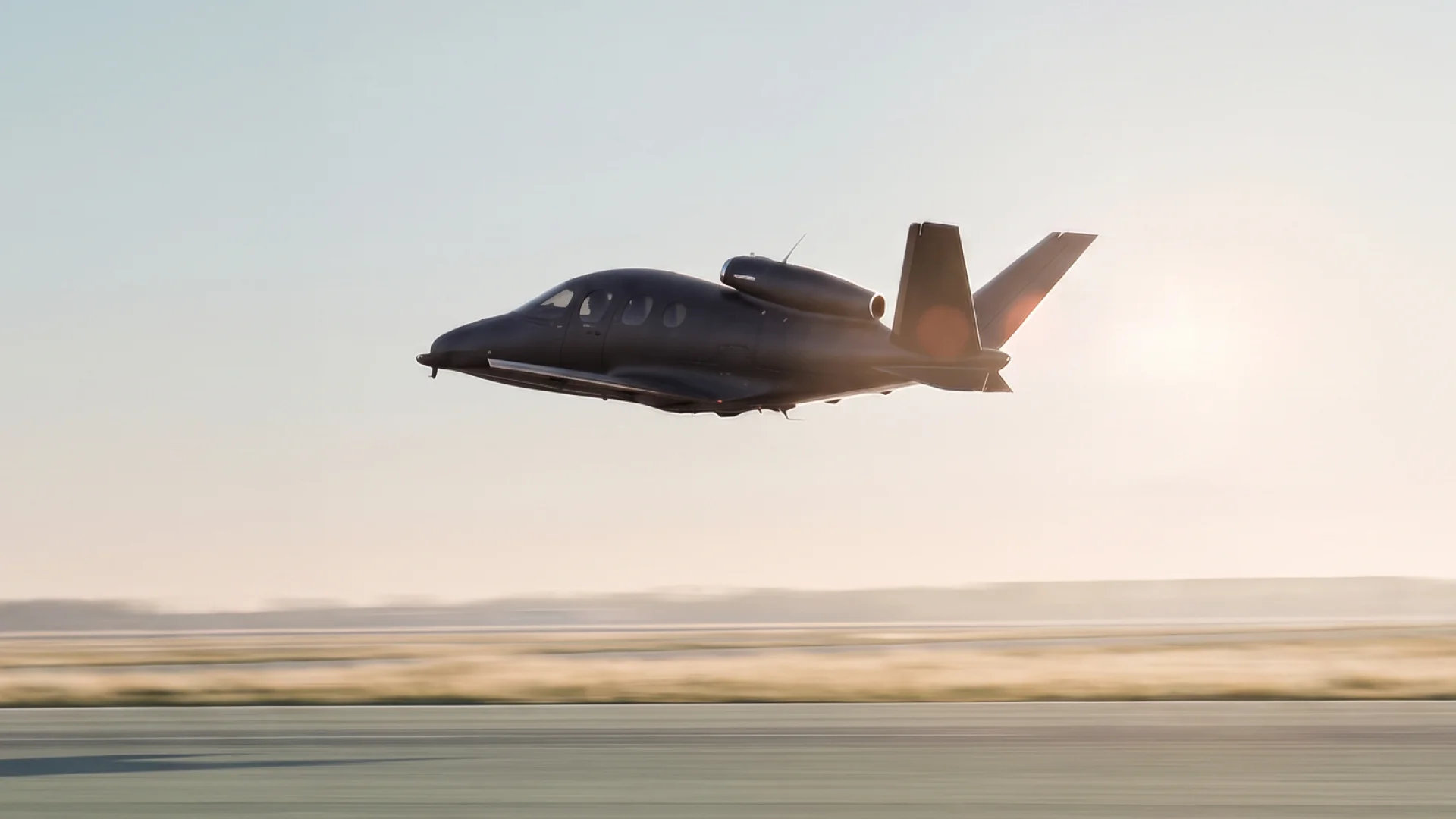
Flyte is a private aviation company. It began as Flewber Global, Inc., which sold on-demand short-distance flights from regional airports in the New York area, routes like Manhattan to the Hamptons, Hartford to MetLife Stadium and White Plains to Mohegan Sun, on the Cirrus Vision Jet, a single-engine very light jet with a whole-airframe parachute and emergency auto-landing. Flights started at $199. The idea was to use some of the more than 5,000 under-used regional airports in the United States as an alternative to driving, rideshares and trains for trips of an hour or two, and to do it with aircraft that already existed and were already certified.
Under Creatd the business was reorganised into three lines and renamed Flyte. Flyte Hops is the regional air-taxi service on the Vision Jet, operating across the Northeast. Flyte Luxe is global charter on larger aircraft for travellers who want white-glove service. Flyte Escapes, launched in October 2025, packages private flights with hotels, villas, festivals and events, built for brands and hospitality partners as much as for individual travellers. A booking platform for all three went live at flyte.travel on April 17, 2025 as a progressive web app on iOS and Android, with real-time pricing on the front end and automated booking, coordination and support workflows behind it, replacing what had been a labour-intensive process.
Why Creatd bought it
When Creatd agreed to the deal in January 2025, Flewber was already carrying paying passengers. Much of the regional air mobility sector, including the electric-aircraft developers with multi-billion-dollar public valuations, was still years from commercial service. Creatd's chief executive said so plainly: those companies were still promising, Flewber was already flying. Creatd's plan was to take a company that already flew and apply what it does, centralised finance, compliance, logistics, marketing and technology, and a booking experience built by the team that built Vocal. Its chief operating officer described the goal as a full-stack operational engine for private aviation, not just a better front end.
The letter of intent was signed on January 22, 2025, after due diligence that began in the fourth quarter of 2024. Creatd's chairman joined Flewber's board on February 7, 2025. The acquisition closed on February 27, 2025 in an all-equity transaction; Creatd's Form S-1 carries Flyte's fair value at acquisition at about $14.4 million. Flewber's chief executive, Marc Sellouk, stayed on to run Flyte. It was Creatd's first operating acquisition in aviation and, for the year Creatd owned it, its largest business.
What Creatd did with it
The first months went to operations: moving back-office functions into Creatd's shared services, rebuilding the booking flow, and tightening the cost of each flight. Creatd's release on closing described Flyte as being driven toward cash-flow positivity through operational optimisation and technology integration. The platform launch in April was the visible result. Behind it, Creatd began assembling an aviation network around Flyte. In April 2025 it signed a letter of intent for Flyte to acquire Air Charter Advisors, a charter broker in Blue Bell, Pennsylvania, with government, corporate and air-ambulance clients, to be kept as an independent operating entity within Creatd's aviation group. In May 2025 Gary Herman, chairman and chief executive of a Nasdaq-listed hydrogen fuel cell company and a licensed commercial pilot, joined Flyte's board of advisors, and Flyte took a step toward acquiring Electra's EL9, a nine-seat hybrid-electric aircraft that can take off and land in 150 feet.
Products followed through the year. The Flyte Jet Card, launched in July 2025, is a membership for frequent flyers with guaranteed aircraft availability, fixed hourly pricing and no hidden fees across a curated fleet, and it accepts Bitcoin, which made Flyte one of very few private aviation providers to take cryptocurrency. Empty Legs, launched in August 2025, sells seats on repositioning flights at up to 90% below charter rates; because the aircraft would otherwise fly empty, the variable cost is close to zero, and each booking gives Flyte demand data on origin-destination pairs, load factors and booking velocity to guide where it launches scheduled Vision Jet shuttles. A curated group of Part 135 operators put their repositioning inventory on Flyte's platform, widening route coverage without fleet capital. Flyte Escapes arrived in October 2025 with itineraries built around a signature event or destination, assembled by concierges and sold through brand and hospitality partnerships.
The market it was built for
Flyte operated in a sector that had already seen what scale without stability looks like. In October 2025 Verijet, once the thirteenth-largest private jet operator in the United States and also built on the Cirrus Vision Jet, went into bankruptcy. Creatd said Flyte was ready to step in where Verijet left off, looking at aircraft, routes and talent that came free, and stressed that Flyte's model was structured operations, accountability and technology that works rather than growth at any cost. In November 2025 Flyte closed on an additional Vision Jet under a financing structure designed to grow the fleet through 2026, with a plan to operate ten Vision Jets and three Pilatus aircraft by the end of that year, serving both passenger and medical-logistics demand.
The numbers moved with it. Creatd reported that revenue for the first nine months of 2025 rose 93% year over year, largely because of Flyte, and that the integration had improved gross margins through lower cost of revenue. Creatd's audited results for 2025, released in May 2026, showed revenue of $3.2 million against $1.5 million in 2024.
How Creatd exited
In February 2026 Catheter Precision, Inc. (NYSE American: VTAK) bought 20% of Fly Flyte, Inc. in a secondary purchase from an existing shareholder; Creatd welcomed it as an investor in the subsidiary and a partner in Flyte's growth. On March 9, 2026 VTAK bought Creatd's remaining 80.02%. The stated price was $11,554,827, paid in cash, a $5 million promissory note payable in installments through December 2026, and VTAK Series D convertible preferred stock; Creatd's release described it as roughly $6 million in cash and nearly $6 million in convertible preferred. The transaction was approved by the NYSE. Creatd recorded a loss on the deconsolidation of Flyte.
Creatd had bought the company with financing and its own common stock; it exited with cash and preferred equity in an exchange-listed company. Creatd said the sale was consistent with its strategy of developing turnkey operating solutions that prepare businesses for the public markets while retaining a minority interest, that it strengthened the balance sheet, and that it gave the company the flexibility to operate without external financing at the parent level while it works toward a national exchange listing.
What it means for a seller
Founders considering a sale to Creatd tend to ask what happens after closing. Flyte is the answer in one case. The founder stayed as chief executive. Finance, compliance and technology moved to Creatd's shared services within a quarter, and the product was relaunched within two. New revenue lines, the Jet Card, Empty Legs and Escapes, were added at roughly quarterly intervals, each designed to make money from capacity the business already had. Board and advisory appointments brought aviation and public-market experience. And when a listed buyer appeared, Creatd sold, took equity in the buyer, and kept working with it. The whole cycle ran from letter of intent to exit in fourteen months.
What Creatd kept
Equity and a client. Creatd holds VTAK Series D preferred stock and the note; on July 24, 2026 it sold part of the preferred for about $2.99 million in cash and used more of it to retire notes. VTAK is now a significant client of Creatd's advisory services, and Creatd provides ongoing consultation on technology development, product and growth as VTAK advances the Flyte platform. The two companies have said they will continue to collaborate on aviation and eVTOL logistics platform development. For anyone weighing what Creatd does with an acquisition, Flyte is the complete example: bought for stock, rebuilt in a year, sold for cash and listed equity, and still a customer. The Flyte investor presentation from Creatd's period of ownership is linked above.
Timeline
- Jan. 2025
- Creatd agrees to acquire Flewber
- July 2025
- Flyte Jet Card
- Aug. 2025
- Empty Legs
- Oct. 2025
- Flyte Escapes launches
- Feb. 2026
- VTAK buys 20% of Flyte
- Mar. 2026
- VTAK buys the remaining 80.02%
- July 2026
- Creatd sells part of its VTAK preferred for about $2.99 million
Sources: Form 10-Q for the quarter ended June 30, 2026; Form S-1 filed September 15, 2026; Creatd press releases from January 2025 to June 2026, all in News.